If you’re a homeowner in Hillsdale, Jackson, Lenawee, Branch, or Calhoun County, you already know what Michigan weather is capable of. Ice storms in January. Hail in April. Wind gusts that peel shingles off rooftops in July. And then the whole cycle starts again. Your roof isn’t just a cosmetic feature — it’s the first and most critical line of defense your home has against everything the Great Lakes State throws at it.
So when it comes time to replace your roof, the most common question Kirk Wick hears after 35-plus years of roofing across southern Michigan is this: Should I go with metal or asphalt shingles?
It’s a fair question, and the honest answer is more nuanced than most contractors will tell you. At Kirk’s 5 Star Roofing, we believe in Exceptional Quality, Extraordinary Service — and that starts with making sure you have the real information before you make one of the biggest investments in your home. Let’s break it all down.
Why Roofing Material Choice Matters More in Michigan
Michigan’s climate is uniquely punishing on rooftops. Southern Michigan homeowners in Hillsdale, Lenawee, and Jackson Counties deal with freeze-thaw cycles that expand and contract roofing materials repeatedly throughout the winter. Ice dams form along roof edges when heat escapes through the attic and melts snow that then refreezes. Spring storms bring hail. Summer brings UV exposure and heat buildup. Fall means leaves, moisture, and early freezes.
The right roofing material for a Michigan home isn’t just about aesthetics or upfront cost — it’s about how that material performs over decades of real-world exposure to conditions that would humble roofing products designed for milder climates. That context is essential before comparing metal and asphalt.
Asphalt Shingles: The Reliable Standard
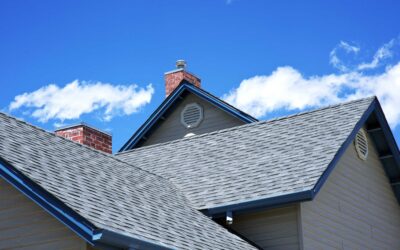
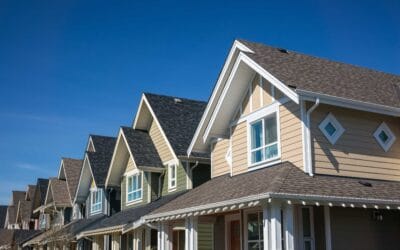
Asphalt shingles remain the most common roofing material in Michigan, and for good reason. They’re affordable, widely available, and when properly installed by an experienced contractor, they perform well for their expected lifespan.
What Asphalt Shingles Do Well
- Lower upfront cost compared to metal roofing
- Wide variety of colors and styles to match any home
- Straightforward installation and repair process
- Architectural (dimensional) shingles offer improved wind resistance and a longer lifespan than older 3-tab shingles
- Most homeowners insurance policies are familiar and comfortable with asphalt shingle claims
Where Asphalt Shingles Require Consideration in Michigan
Even with today’s improved products, there are factors every Michigan homeowner should weigh. Asphalt shingles, regardless of quality, have a finite lifespan compared to a properly installed standing seam metal roof — meaning most homeowners will eventually face replacement.
In severe hail events, shingles can experience granule loss that accelerates wear, though impact-resistant options are available and worth discussing with your contractor. Ice dam damage is also a real concern in Michigan winters, but this is far more a function of proper installation, underlayment selection, and attic ventilation than it is a flaw in the shingle itself.
Here’s what’s important to understand: asphalt shingle technology has improved dramatically over the past two to three decades, and the industry-wide perception that “old shingles were better” simply isn’t accurate.
The premium brands Kirk’s 5 Star Roofing installs — Atlas and Malarkey — carry limited lifetime warranties and are specifically engineered with strong algae resistance built in, backed by long-term manufacturer guarantees. Sealant technology has also improved by leaps and bounds in the last ten years alone, making today’s quality shingle systems significantly more reliable at critical transition points than anything available a generation ago.
A properly installed Atlas or Malarkey shingle roof on a southern Michigan home can realistically perform for 30 to 35 years without requiring any significant maintenance. For the right homeowner and the right budget, that’s a genuinely compelling value.
Asphalt shingles are a solid, proven choice — especially for homeowners who want a quality installation at a reasonable price. The key is proper installation with quality underlayment, ice and water shield at the eaves, and correct ventilation. A poorly installed asphalt roof will fail years ahead of schedule regardless of the shingle brand.
Metal Roofing: What Homeowners Need to Know (And What Most Contractors Won’t Tell You)
Here’s where the conversation gets important — and where Kirk’s 35-plus years of hands-on experience becomes genuinely valuable to you as a homeowner.
When most people think about metal roofing, they picture a sleek, long-lasting, maintenance-free roof that outlasts everything else on the market. And that can absolutely be true. But it depends entirely on which type of metal roofing you’re getting — and this is a distinction that too many contractors gloss over or ignore entirely.
There are two fundamentally different categories of metal roofing, and they are not equivalent.
Rib Metal (Exposed Fastener Roofing) — Know What You’re Buying
The most common metal roofing product sold in our area of southern Michigan is what’s known as rib panel or exposed fastener metal roofing. You’ve seen it — it has visible raised ribs running vertically down the slope, and it’s fastened to the roof deck with screws that penetrate directly through the metal panel.
Here’s what most homeowners don’t know about this product: it was originally engineered as siding for barns and agricultural buildings in rural areas — a cost-effective alternative to traditional siding. At some point, contractors started applying it to residential rooftops, and it became widely recognized as a “lifetime metal roof.” Kirk’s experience over three-and-a-half decades tells a very different story.
The Real Limitations of Rib/Exposed Fastener Metal Roofing
Exposed Screws Are a Long-Term Liability
Every screw that penetrates through the metal panel is a potential entry point for water. Each screw has a rubber washer designed to create a watertight seal — but UV radiation from the sun degrades those rubber washers over time.
As they harden, shrink, and crack, the seal fails. Additionally, as the lumber structure of your home naturally settles and expands and contracts with seasonal temperature and humidity changes, those screws can back out, further compromising the seal.
Sealant-Dependent Flashing Is a Weak Point That Will Fail
Rib metal panels cannot be properly flashed around walls, chimneys, pipes, and roof penetrations using metal-to-metal connections the way a true standing seam system can. Instead, these details rely heavily on sealants — typically Butyl tape — to waterproof the vulnerable transition points.
Sealants have a finite lifespan. They dry out, crack, and eventually fail. When that happens along a valley or at a wall transition, water finds its way in, and the damage compounds quietly inside your home’s structure before you ever see it on your ceiling.
The Warranty Tells the Real Story
Most rib metal roofing products carry only a paint warranty — not a comprehensive roofing system warranty. That’s because the metal itself is typically a thinner gauge with fewer alloys than the steel used in premium standing seam systems.
This is precisely the type of metal roof that longtime homeowners often remember when they think of “the metal roofs that used to last forever” — but the products being sold today as equivalent are not the same material.
None of this means rib metal is worthless. For outbuildings, pole barns, and agricultural structures — the applications it was designed for — it can be a perfectly appropriate and cost-effective solution. But as a primary roofing system on your home, with the expectation that it will last decades without significant maintenance or sealant reapplication, it’s important to go in with clear eyes.
Standing Seam Metal Roofing — The Real Deal
Standing seam metal roofing is what Kirk’s 5 Star Roofing considers the gold standard in residential roofing — and after 35-plus years in this industry, Kirk Wick stands behind that assessment completely.
Here’s what makes standing seam genuinely different:
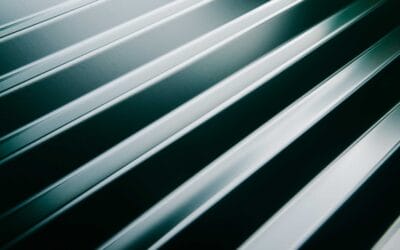
- No exposed fasteners. Standing seam panels are connected at concealed clips that fasten to the roof deck beneath the panel surface. No screw penetrates the face of the metal, eliminating one of the primary failure points of exposed fastener systems.
- All-metal flashing systems. Standing seam roofing can be detailed with fully integrated metal flashings at every transition point — walls, valleys, chimneys, pipes, and penetrations — without relying on sealants or caulks for the primary waterproofing. The flashings are as durable as the roof itself, lasting the full life of the metal system.
- Superior material composition. True standing seam systems use higher-gauge steel with a more robust alloy composition than typical rib panel products, reflected in comprehensive warranties — not just paint coverage, but full roofing system warranties.
- Thermal movement is engineered in. Standing seam systems allow the metal panels to expand and contract with temperature changes through the clip system, without stressing the fasteners or the panel seams — critical in Michigan’s climate, where temperature swings of 80 or more degrees between summer and winter are routine.
The result is a roof that, when properly installed by an experienced contractor, genuinely delivers on the promise of a lifetime roofing solution. It’s a premium investment with a price point to match — but for homeowners who plan to stay in their home long-term or want to maximize resale value and eliminate future replacement costs, it’s a compelling case.
Side-by-Side Comparison: What Michigan Homeowners Should Know
Lifespan
Quality asphalt shingles (Atlas/Malarkey) typically last 30 to 35 years with proper installation. Rib metal, realistically, may last 20 to 35 years before sealant failures and fastener issues require significant attention. Standing seam, properly installed, can last 50 years or more.
Upfront Cost
Asphalt shingles are generally the most affordable. Rib metal sits in the middle. Standing seam is a premium investment with a higher initial price.
Long-Term Value
When you factor in replacement cycles, a standing seam roof installed once may outlast one or more asphalt roofs. Over a 50-year window, the total cost of ownership often favors the premium metal system.
Storm Performance
All three options can perform well in storms when properly installed. Standing seam and high-quality architectural shingles with strong wind ratings perform best against Michigan’s hail and high winds.
Maintenance
Quality asphalt shingles require little to no maintenance when properly installed. Rib metal requires periodic sealant inspection and eventual reapplication. Standing seam requires the least ongoing maintenance of the three.
The Right Answer for Your Home
There isn’t a single correct answer for every Michigan homeowner — the best roofing material depends on your budget, how long you plan to stay in your home, your home’s architectural style, and your appetite for long-term versus short-term cost optimization.
What Kirk’s 5 Star Roofing will always do is give you the honest picture. If asphalt shingles are the right fit for your situation, we’ll tell you that and install them with the quality and care that’s earned us our reputation across Hillsdale, Lenawee, Jackson, Branch, and Calhoun Counties.
If standing seam metal is the roof your home deserves and your budget allows, we’ll walk you through exactly why it’s the best long-term investment available. And if a contractor is recommending rib metal and calling it equivalent to standing seam — now you know the questions to ask.
The Roof Guardian is watching out for you. That’s the promise behind every project we complete.
Talk to Kirk’s 5 Star Roofing Before You Decide
Before you commit to any roofing material or sign a contract with any contractor, get an honest assessment from someone who has been doing this for over three decades right here in southern Michigan.
Kirk Wick and the team at Kirk’s 5 Star Roofing will inspect your roof, walk you through your options with complete transparency, and give you a free estimate with no pressure and no surprises.
Call us at (517) 425-5056.
Request your free estimate online today.
We serve homeowners throughout Hillsdale, Lenawee, Jackson, Branch, and Calhoun Counties, Michigan. Let’s make sure the next roof over your family’s head is the right one.